How long does a villa interior architecture project take?

How long does a villa interior architecture project take?
In this office a villa interior architecture job typically takes 6–8 months; size, site freedom, how ready the house is, season and style stretch or shorten that window.
The range is not a promise that one villa finishes on a fixed day. A 350-square-metre house and a 700-square-metre house do not share the same calendar. Work at Santra Villa in Çayyolu, for example a 700 m² house from 2026, does not move at the same pace as a smaller villa in Gölbaşı. When you talk about time you put floor area, whether the house is empty, and the site’s working rules on the table.
On villa interior architecture in Ankara jobs, Umut GÜRLER Interior Architecture reads waterproofing, the garden manhole and the main services on site before room layout. If that list is skipped the drawing may look finished while the site overruns. The 6–8 months cover survey through handover, not furniture fitting alone.
Owners sometimes ask for paint and furniture only. Paint and furniture do not stay if wet rooms and services are unfinished. If people still live in the house, finishes are chosen late, or the site is closed at weekends, the job can run past 8 months. Early preparation, a free site and clear decisions pull the work toward 6 months. Winter slows outside connections; summer cuts the day with humidity and permitted hours.
This article does not give a price. What drives cost is set out separately in what drives the cost of a villa renovation. The only question here is the calendar — how long a villa renovation takes: how long a villa interior job typically takes in this office, and what lengthens it.
What lengthens or shortens a villa interior project?
Floor area, how free the site is, how ready the house is, the season and the interior style set the duration together; no single factor locks the calendar on its own.
Size is the first measure. A 350 m² Mavi Ladin villa (Beysukent) and a 700 m² Santra Villa job (Çayyolu) do not finish in the same weeks with the same crew. More wet rooms, longer pipe runs and more made-to-order pieces add days. Floor area is not enough on its own: ceiling height, the stair void and garden levels also swell the work.
Site freedom is the second measure. An empty house can be worked through the day. A lived-in house proceeds room by room, with stops for dust and noise. If the site management bans Saturday and Sunday, two days drop out of every week. Some sites allow work only in official hours. Those cuts add up in months; a job that looked short on paper runs long on the calendar.
Preparation is the third measure. In an unfinished villa the mains often wait at the door; in an older villa tired waterproofing and a blocked manhole are opened first. Late decisions write themselves on the same sheet: stone, timber floors, kitchen carcasses and lights are not fabricated until they are chosen. Style is the fourth measure. Heavy joinery, custom metal and in-situ work last longer than a paint-and-furniture job. Season is the fifth. Facades, garden drainage and heating lines slow in winter.
The five measures are read together. A large house, a free site and firm decisions move toward 6 months. Even a smaller house overruns 8 months if it is occupied, weekends are closed and materials arrive late. No price is quoted. The point is which measure is holding the calendar and which is missing it.
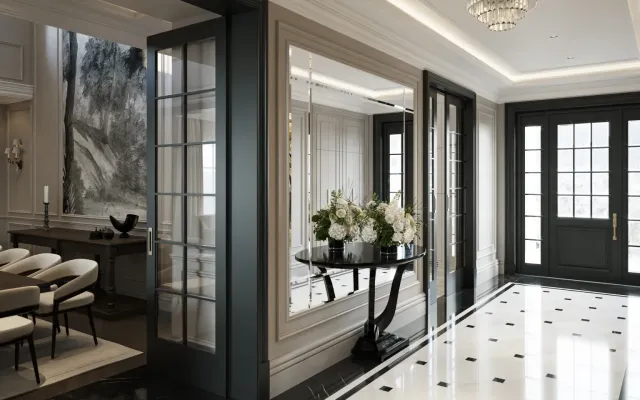
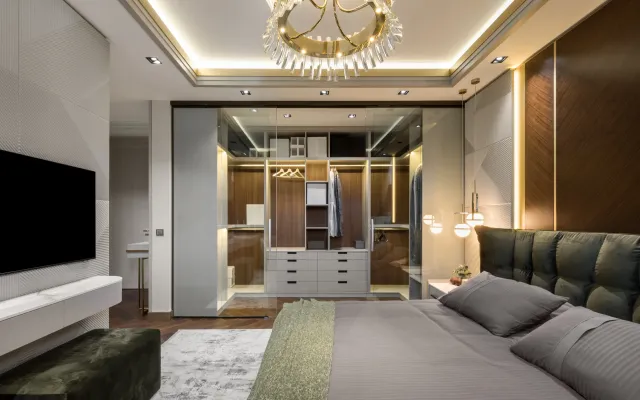
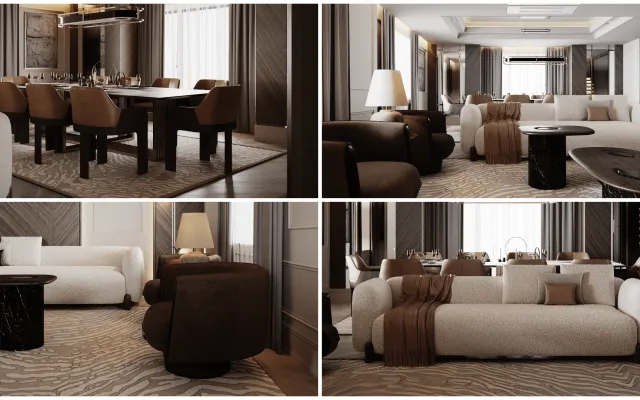
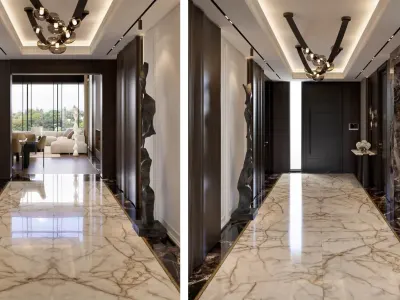
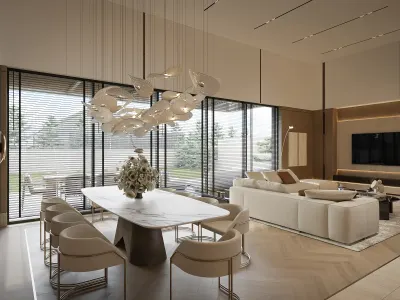
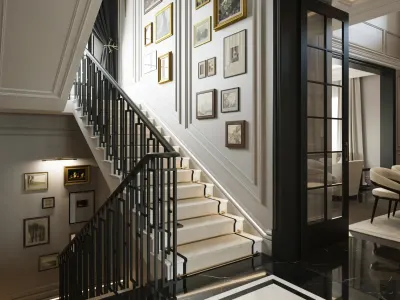
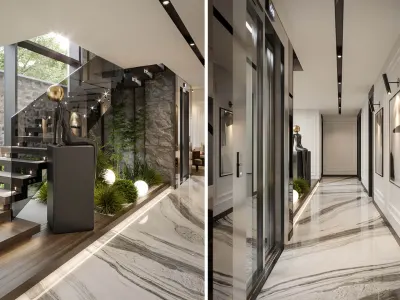
How does a 700 m² villa interior job look on site?


Santra Villa - Serdar Bey
What stages does a villa interior job pass through?
A villa interior job runs in four main stages — survey, drawings, site and handover — and each stage opens the door to the next.
Survey measures the house, checks levels, and looks at waterproofing and the manhole on site. Drawings set layout, electrical and mechanical routing and the finish list. On site, strip-out, services, wet rooms, floors, paint and joinery follow in order. Handover places furniture, lighting and the last adjustments. Skip a stage and the next one both lengthens and fails.
| Stage | What is done | What changes the time |
|---|---|---|
| Survey | Measure, levels, waterproofing, manhole, mains | Occupied or unfinished house, papers ready |
| Drawings and finishes | Layout, ceilings, kitchen, wet rooms, lists | Late decisions, made-to-order style |
| Site | Strip-out, services, floors, paint, joinery | Working hours, weekend bans, season |
| Handover | Furniture, lighting, snagging | Lead times, last-minute changes |
Survey can look short. Time is not lost there; it is lost on site if the survey was wrong. Drawing approval sits with the owner. While approval waits the crew moves to another job and the return costs a week. Site is the longest piece because wet rooms and services do not skip the queue: floors do not go down on wet plaster, and joinery does not sit on an unfinished floor.
Handover is not the day the sofa arrives. Pendants, door handles and the last sealant piled into one week stretch the job again. The 6–8 month calendar is the sum of these four stages. The table shows which stage swells; the swollen stage is often not the site but drawings waiting for a decision and a finish.
What hours can you work on a villa site?
Official working hours, weekday versus weekend rules and the site’s own ban cut the working day together; that cut shows up as months on the calendar.
Weekday daylight is the main window on most villas. Some apartment and site managers close weekends or squeeze them into an afternoon. If Saturday and Sunday are closed, the week shrinks to five days. A 6–8 month job then sits on fewer working days. When you talk about the calendar, a calendar month and a working day are not the same thing.
Under Article 21/3 of the Zoning Law, works that do not change the load-bearing parts of the building or its external appearance are not subject to a building permit. Not being subject to a permit does not mean no consent, fee or application is required. Simple alteration and substantial alteration are split. Work that touches structure, the stair or the façade is substantial; paint, floors and loose furniture usually sit on the simple side. An application to the site board or the municipality is a separate door.
Site rules run independently of that door. On estates such as Santra Villa, Mavi Ladin and Quarte Life the board’s rules come first: noise hours, lift use and rubble removal differ from one management to the next. Some office residences allow work after the close of business, after 18:00; on a villa estate that rule is rare and the opposite is common. If nothing is written, a neighbour complaint still stops the job.
Umut GÜRLER Interior Architecture asks for this hour window at survey. An 8-month job on a Saturday-closed estate lasts longer than the same scope on a free standing house. Writing “the job is short” on the calendar while ignoring the weekend is how plans slip. Working hours belong in a duration article because the month count is only as real as the days you are allowed to work.
We compared the site-rule and scale differences between villas in Çayyolu, İncek and Gölbaşı in this article.
How does duration change between an unfinished villa and a lived-in villa?
In an unfinished villa the mains often wait at the door; in a lived-in older villa tired infrastructure is read first — the two jobs do not run on the same calendar.
In an unfinished villa the walls are often bare. Whether cold water, waste and power actually enter the house is seen at the threshold and at the board. If they do, the site can spread through the house sooner. If they do not, the lines are pulled first and room layout waits. In an older lived-in villa the picture reverses: waterproofing under the floor, the garden manhole and a raised road level are hidden. Duration cannot be judged before strip-out.
How that infrastructure check is done is set out step by step in the villa renovation infrastructure guide. This article puts a calendar on that list: if the check runs long, survey swells inside the 6-8 months and the site starts late. How the living room, kitchen and garden threshold are planned is in the villa decoration examples piece. A wrong threshold means a wall moves on site; a moving wall costs a month.
A lived-in house also has logistics. One room is closed, furniture is shifted, dust sheets go up. If a child's room or a home office cannot be emptied, that volume waits until the end. An unfinished house has no such shuffle; heating, water and power may still be irregular. In winter wet-room work slows in an unfinished villa because the shell is not yet warm.
In both cases the talk is duration, not cost. An unfinished house with live mains and a free site can move toward 6 months. A lived-in older house, a closed weekend and hidden infrastructure can pass 8 months. Which side you are on is clear on survey day; the calendar is written after that day.
Duration does not stretch this far in an apartment; since the area is smaller and there are fewer wet areas, an apartment renovation usually finishes in 2-4 months. We explain this difference, and whether you can live in the flat during the renovation, in our How Many Months Does an Apartment Renovation Take, Can You Live There? article.
Common questions about villa interior project duration
How long does a villa interior architecture project take?
In this office a villa interior job typically takes 6–8 months; size, site access, preparation, season and style stretch or shorten that window.
Is the calendar the same for an apartment or an office?
No: an apartment is 3–6 months, a residence office 1–2 months, and an office building 6–8 months like a villa, each under its own site rules.
How do weekend bans change the duration?
If Saturday and Sunday are closed the week shrinks to five working days, so a 6–8 month calendar spreads the same work over fewer days.
Do you need a building permit for interior work?
Under Zoning Law article 21/3, work that does not change structure or the exterior is not subject to a permit; that still does not remove site consent or fees.
Does an unfinished villa finish faster?
If the mains are at the door and the site is free it can move toward 6 months; missing lines or winter wet rooms still spread the job toward 8 months.