Which Design to Use for an Executive Office?

An executive office has to carry seriousness and formality; that is not one style name. Room size, the firm’s work and what the desk actually does set palette and furniture together. More than one route can reach the stance you want.
What to Watch When Choosing Furniture
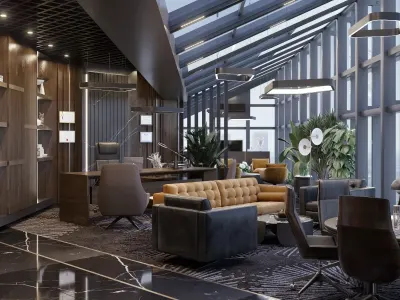
An executive room often brings dark wood to mind. Dark colour can read as formal; it is not a rule. In a narrow, low room, dark walls and a dark desk eat volume. In a wide, well-lit room the same palette can sit formally.
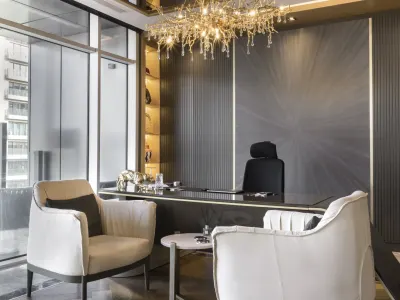
There is no single design for every manager’s office. Measure first. In a small executive office, beige, cream and light wood keep the room open without dropping formality. Form works as hard as colour: a heavy carved set cuts walking space on a tight plan; a plain desk and a side cabinet do the same job with less floor.
Current project: Law Firm Design


Law office design
Functional Executive Office Designs
The decision is not picking a suite from a catalogue. Write first which pieces are actually needed. The desk comes first; cable, sockets and paper have to be solved in the body of the desk. A built-in charge point or a cable run cuts the strip that later piles on the top.
A minimal line keeps pieces that work and drops ornament that does not. That is not a cold room; it is building the firm’s stance with desk, seating and floor. As Umut GÜRLER Interior Architecture - Ankara Interior Architecture we write the order in an executive office as survey, room layout, then material.
Is carpet used in an executive office? puts the floor decision next to this article.