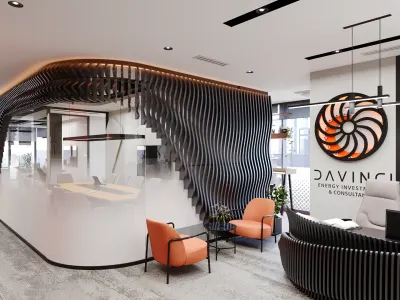
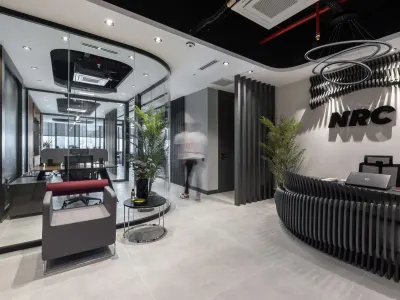
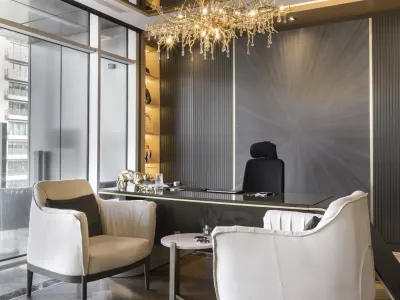
The Role of Acoustic Design: Improving Sound Quality in Meeting Rooms

Improving sound quality in a meeting room is built with the right acoustic material and the right room geometry. If the room’s sound behaviour is not used on site, microphone and speech pile on each other. In a room opened often during the working day, speech has to be intelligible; “enough sound” is not a single decibel figure.
The role of acoustic design in an office is not to erase noise. It is to keep talk inside the room and cut the corridor outside. Layers that have to be written: surface, door, ventilation. A finish is not chosen before those layers. A survey by an interior architect who works in this field produces fewer surprises than a guess.
What Acoustic Design Does in a Meeting Room
The exchange of ideas and collaboration are built on hearing each other. Function and focus get harder in a box with a long echo. At a table where a decision is taken, people have to listen; listening becomes possible when noise is cut.
An absorbing ceiling and wall panels help reduce noise; “quality” is not a single brand. Killing the echo completely is rarely possible and rarely needed — a short decay is enough. Privacy is part of the same job: a sentence inside should not carry into the corridor. A technical sound system will not save the microphone if the room itself is not absorbed. As Umut GÜRLER Interior Architecture - Ankara Interior Architecture we write volume and the neighbouring room first at survey.
Current project: A. Telekom Office


A. Telecom Office
Designing a Meeting Room for Collaboration
Collaboration wants seating that suits the exchange of ideas and a table that can be heard. The plan is written so people can see and hear each other. An ergonomic chair can lift the day; if sound and light are not usable, the chair is not enough.
A room aimed at collaboration is not finished until sound quality is raised. Noise and echo control are not done once and forgotten; they are read again when furniture changes. A room that encourages original thinking does not automatically raise competition. Minimal furniture and acoustics sit on the same diagram: the article on a minimalist approach to meeting-room furniture tells the pieces.