Open Office in Legal Services: Evaluation from the Perspective of Communication and Efficiency

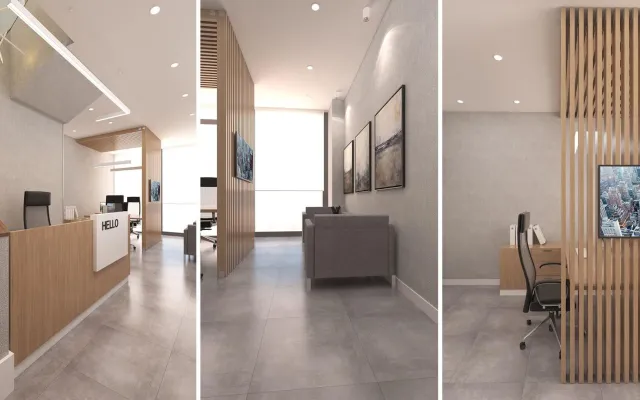
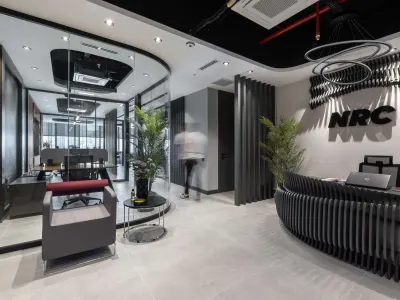
In legal services an open-plan office means more than one person sharing a floor; it does not mean every room stays without walls. Reception, a team bench and a closed meeting sit in the same plan. An undivided volume helps work where a file passes from hand to hand. A bench where a client conversation can be overheard is a planning error.
If the workrooms are not set up professionally, a productive day is hard. That is why an open bench has become a common piece in a law office — it cannot be written as “the preferred model” on its own. As in design and advertising offices, the room follows the work. Spaciousness can lift output; without file security and acoustics, space is not enough.
What Should a Legal Office Be Like?
Legal services are the support people and companies need in disputes, contracts and criminal matters. The place that work is offered is the law office. Feeling safe starts at reception and the wait; noise from an open bench should not break that threshold.
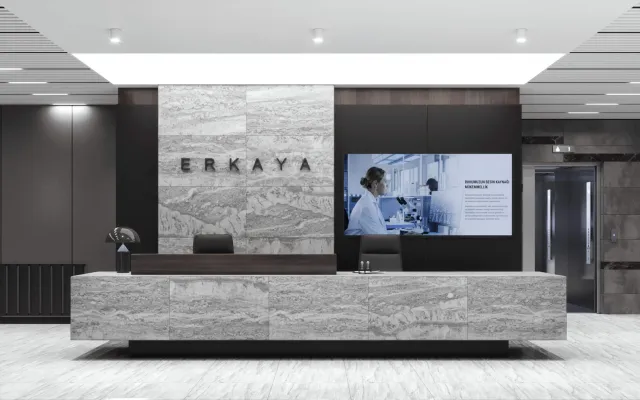
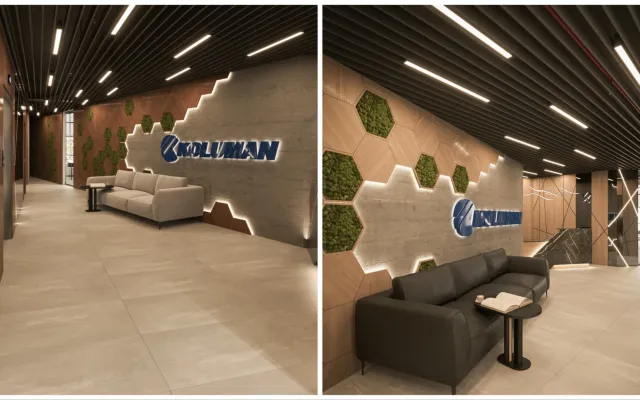
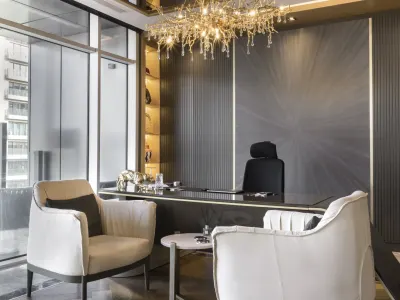
In a room where rights are defended, the words “rights, freedom, justice” are not solved by writing them on a wall. Material, light and the language of the door should stay calm and readable. Open plan helps where papers and assistant work flow; the client meeting stays closed. A bench that is not monotonous can keep a team alert. As Umut GÜRLER Interior Architecture - Ankara Interior Architecture we write privilege first at survey, then the visible work.
Current project: Ascan Mining Cement


Basak Akgun Law
How Open Plan Affects Communication and Output
In an open law office, desks, chairs and light are set to headcount and seating. A larger floor does not produce output by itself; desk spacing, file cabinets and a walking strip have to be written. Given the tiredness of the day, ceiling height and daylight do more work than a dim corridor.
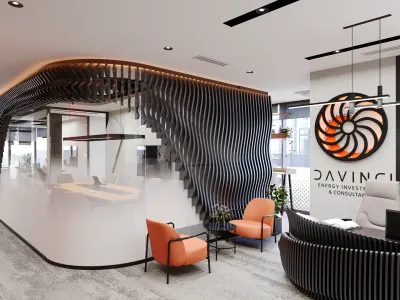
An open bench loosens the old room hierarchy. Talk, collaboration and a limited autonomy are easier on that floor; so is the exchange of ideas. Original ideas are not produced every day — file deadlines and the diary are talked about more often. The pace on a start-up bench is not the pace on a legal bench. The article on open offices for founders and start-ups tells that difference in another rhythm.