Executive Room Lighting Designs Guide: Increase Your Work Efficiency

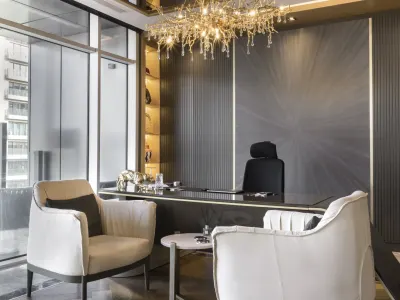
Lighting design in the executive room is a layer that matches the office language and makes the desk readable. If the faces of executive, staff and guest are not strained, the day lasts. Eye fatigue comes from the wrong fitting and a bright surface. That is why a correct, quiet line is chosen.
Light is written to make the working day easier; it is not ranked as “of great importance”. A survey by an interior architect is needed for correct use. Artificial light at a sufficient level and a fitting colour temperature carries the room. Office use is built that way; output is not promised.
What to Watch When Choosing Light in the Executive Room
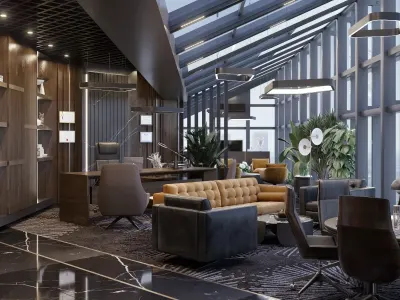
Light is one of the layers that carry the day in an office. A set-up that does not tire the eye or break focus makes the people in the room more comfortable. A claim of a successful workplace is not written; a readable desk is. A façade that can take daylight helps before artificial light is added. A large window makes that easier; it is not possible in every building.
Artificial light also changes the desk. Task and ceiling are set together for a sufficient level. A surface that does not reflect or glare protects the screen. Energy use is not ignored; it is not ranked as “an advantage because it saves”. As Umut GÜRLER Interior Architecture - Ankara Interior Architecture we write window and screen direction first at survey.
Current project: Leather Concept


Deriden Concept
Supporting the Working Day in the Executive Room
One way to carry the day at work is to build a room that can be sat in. Layers in the executive room support that. Furniture has to work if time is to be held; output is not the only principle.
Comfort for long sitting and a quiet line sit in the same room. Lighting that matches the office language is chosen. Such a room can be built; a guarantee of a “successful executive room” is not written. For the furniture layer see modern office furniture for the executive room.