Efficiency in Legal Services: The Role of Open Office Environments

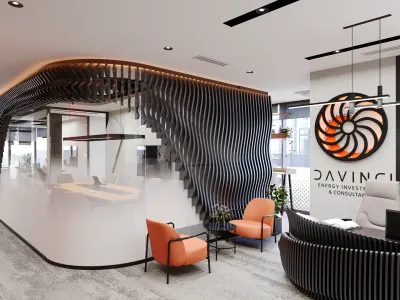
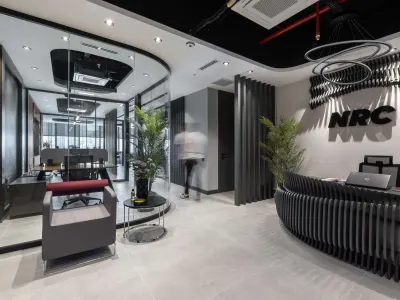
In legal services, efficiency is not only a goal; it is whether the file tempo holds. Firms try new layouts to grow collaboration; an open office is one of them. It is not right to inflate the effect as “very large”. An open plan can support teamwork and job satisfaction — if confidentiality and focus are written.
As Umut Gürler Interior Architecture — Ankara Interior Architecture we do not measure efficiency on a legal floor by fitting more desks into the square metres. The test is that the right work sits in the right room.
Raising Collaboration
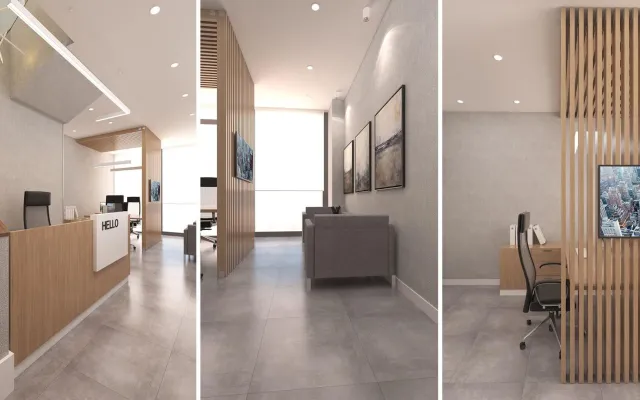
A traditional law office was built from closed doors and divided cells. Moving to an open office loosens that rule. When the barrier drops, a colleague can consult on a short path, share a thought and pass a problem. Decisions and problem-solving can speed up for that reason.
An open office layout can grow a sense of camaraderie and soften a stiff hierarchy. Teamwork takes hold. Client meetings and sensitive files still stay in a closed room. Collaboration does not replace confidentiality; the two sit side by side on the same diagram.
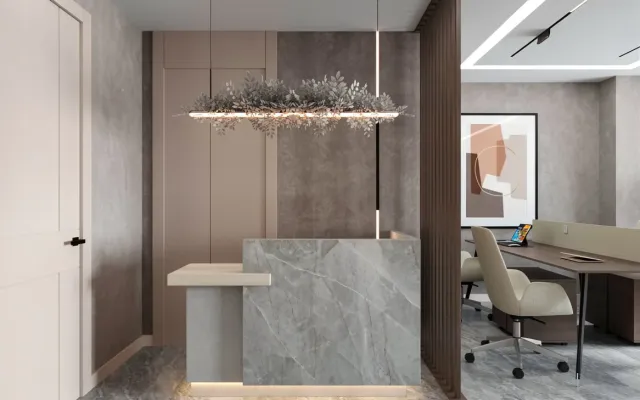
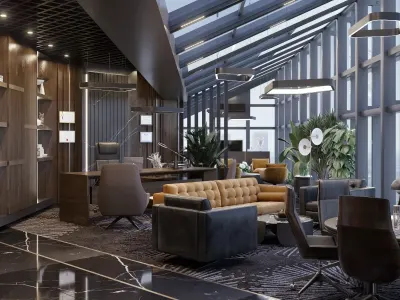
Current project: Besa Tower Office Design


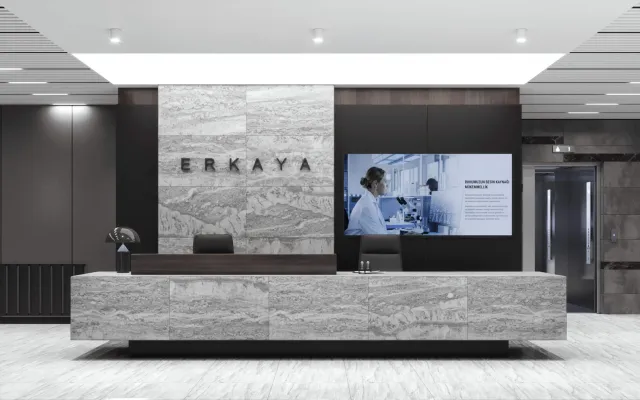
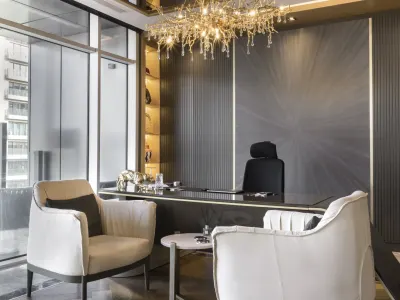
Law Office Design
Output and Job Satisfaction
A link is often drawn between office layout and satisfaction; we do not want to write that as a universal research result. In legal work, deep focus and collaboration weigh the same. An open floor can reduce isolation and grow a sense of belonging — if interruption is managed.
In legal services, where care matters, the role of layout cannot be ignored. An open setting is a tool for output and the team; it is not imposed as “the right step”. The firm has to match the tempo of its workforce. As Umut Gürler Interior Architecture — Ankara Interior Architecture we write that match at survey.
The article on advantages and challenges of open offices in law firms opens the confidentiality side. Built work is on the office projects page.