Color Psychology and Meeting Room Designs: Factors Affecting Business Performance

There is no single switch in a meeting room that affects work performance. Table spacing, duration, acoustics and light sit on the same list. Colour is part of that list; it is not enough to “manage” the design. A promise of productivity does not arrive just because a professional interior architect is hired — the type of work has to be written at survey.
Colour psychology is read here as association, not as a lab result. Red does not speed everyone up; green does not calm everyone. Still, the tone of wall, table surface and fabric changes how the room feels. The claim that every detail “directly affects” performance is not written; what can be judged is seating, sightlines and tiredness.
Colours Used in Meeting Rooms
A colour choice is not a decisive switch for output; it is a layer that changes the atmosphere. Its link to ergonomics is glare and contrast. Tones said to “support creativity” can tire the eye in a long board session.
Red is associated with energy and speed; if it dominates a table where people sit for hours, talk can harden. Green is read as calmer through a nature association. Yellow can hold attention; on a large surface it produces glare. Pink is used in social rooms; it is rarely the main colour in a board room. As Umut GÜRLER Interior Architecture - Ankara Interior Architecture we write duration and screen use first at survey, then the palette.
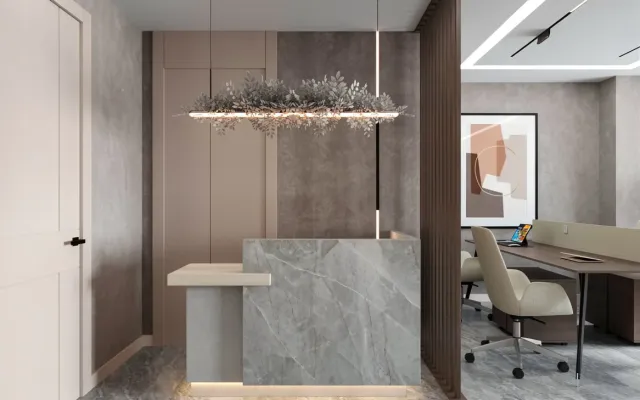
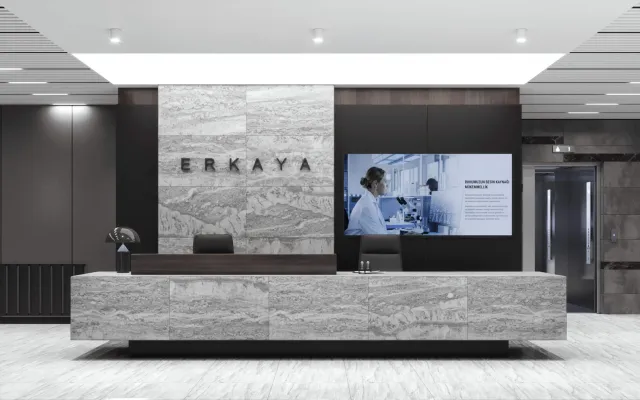
Current project: Yelken İş Tower Entrance


Yelken Business Tower Entrance
What Else Shapes How a Meeting Goes?
A meeting room is where a decision is taken and a project is started. That does not make it the “most important” room in the office. Focus is kept by cutting distracting surfaces and noise. Table and chairs are chosen so people can sit for the length of the session.
Lighting is set so face and paper are not strained. Board, sockets and a spare chair stay in the room; not every tool has to be stocked. A manager is not expected to think through every detail — a survey list is enough. The flexible room and the colour palette are read on the same plan: the article on flexible meeting rooms tells the conversion.