Changing Work Environments in Legal Practice: Open Office Trends and Adaptation Strategies

Open-office trends in legal practice are discussed more often as tools change. Traditional working environments are giving way to floors that leave room for collaboration and flexibility. That office trends are shifting does not mean every firm should copy the same hall. A practice that wants to hold in a changing field should read the open plan and the adaptation together.
As Umut Gürler Interior Architecture — Ankara Interior Architecture we treat the trend by file rhythm and a confidentiality test — not by a ranking sentence.
Legal Practice in an Open Office
Historically a law firm was named by the private room and a formal hierarchy. Faster technology is also shifting how lawyers work. An open office tries to answer a new rhythm that wants collaboration, transparency and agility; it aims not to leave the lawyer behind a physical barrier. A chance meeting can produce a new line on some files.
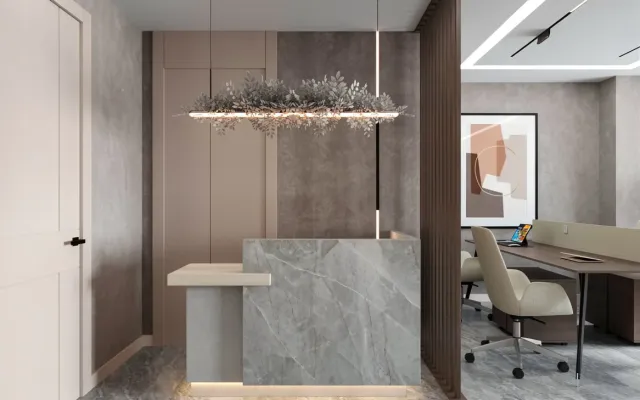
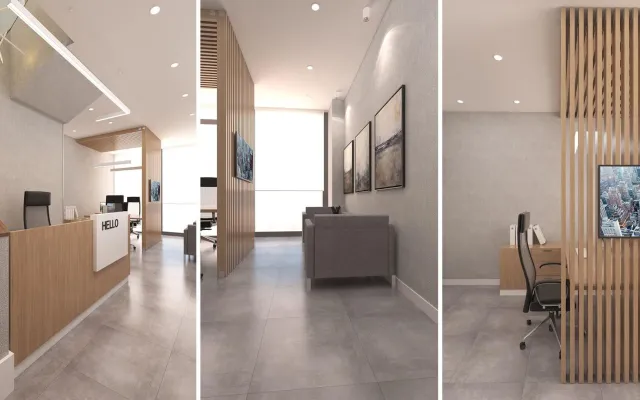
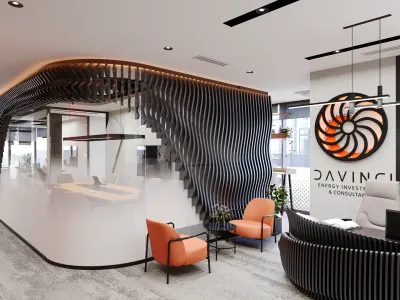
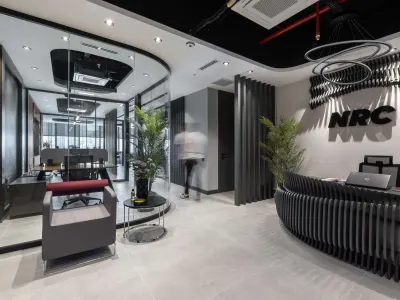
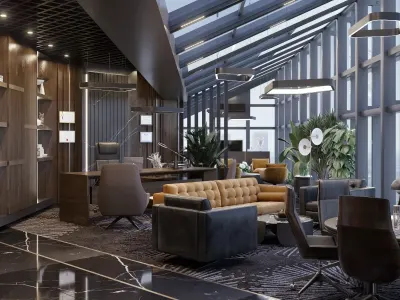
An open office in legal practice shows itself in a shared work area, a common social niche and a partial step away from the closed door. The aim is better communication, knowledge-sharing and teamwork. If the plan is not aligned with current tools, the diagram stays on paper. A sense of community and a shared purpose are built with the confidentiality line, not instead of it. Technology integration carries that line too: a shared screen on general work, a lockable room for a sensitive meeting.
Current project: Telsam Telekom


Kale Office Law Office Design
Adaptation in the Legal Office
Holding on in a changing setting requires some renewal. Lawyers need an adaptation strategy that actually works. Technology integration simplifies the workflow on an open floor: cloud, a shared document and a matter-management tool keep order even in a shared room. We do not push a product name; the test is whether the team really uses it.
Flexibility and autonomy should also be written into the culture. A remote day and a flexible hour can hold the personal and professional balance; satisfaction and tempo hang on that. A short internal briefing on digital literacy and virtual talk sits beside the open plan.
As the trend is taken up, keeping pace with a competitive tempo can get easier. That is not written as a duty for every firm; some work stays tied to a closed room. Reading the change is a chance to redefine the future of the practice — not an imposition. As Umut Gürler Interior Architecture — Ankara Interior Architecture we set the diagram to that chance.
The article on the role of open offices in legal services opens the efficiency side. References sit on the office projects page.